
What Rhode Island homes are up against.
NOAA National Centers for Environmental Information, Storm Events Database, bulk CSV export, events 2015-01-01 through 2024-12-31. · U.S. Census Bureau, 2020-2024 American Community Survey 5-Year Estimates

A compressor here gets relatively little rest between the end of one working season and the start of the next. Homes in Rhode Island run heat about eight months a year, from October through May. That leaves the cooling side with a short window before it is called on again, and a unit with a weak contactor or an undersized refrigerant charge will surface that problem on the first genuinely hot day rather than quietly self-correcting over a long off-season. Contractors quoting a replacement here spec tighter than they might where equipment sits idle longer, because the calendar does not leave room for a marginal install to coast.

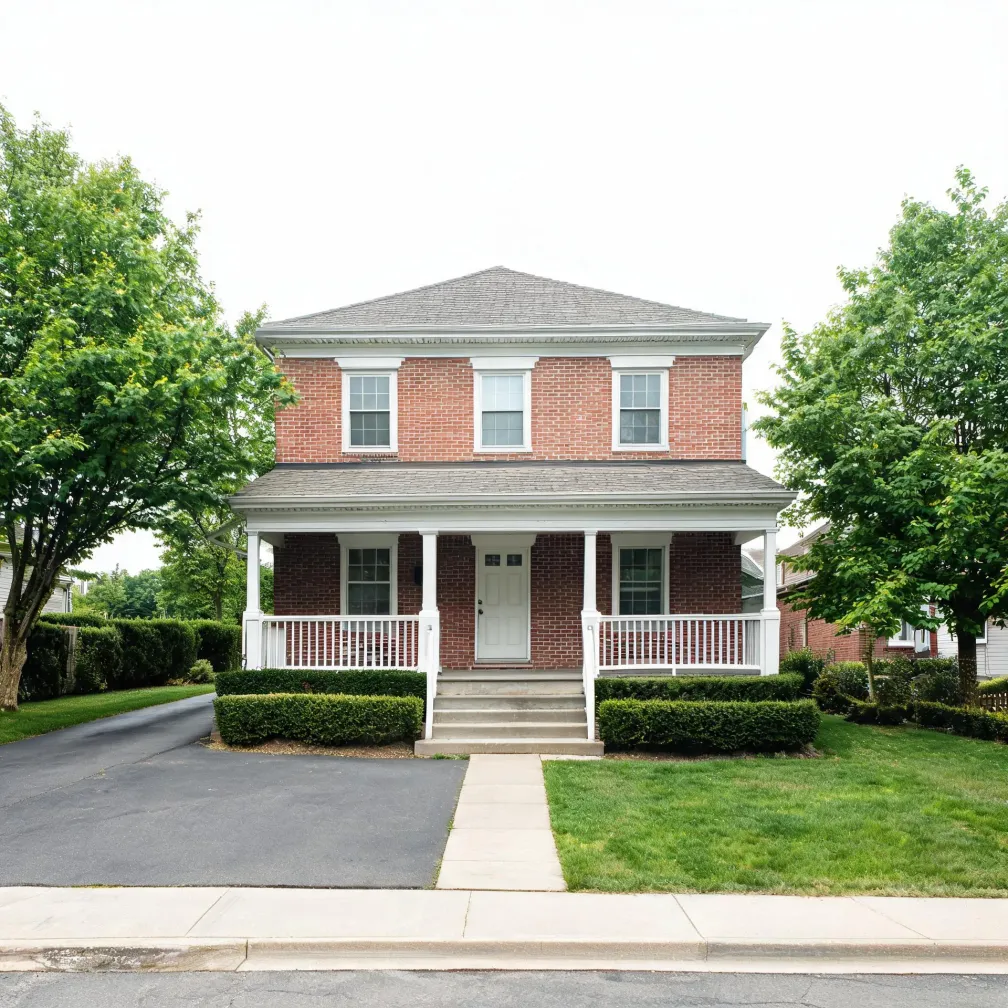
What a contractor finds behind the access panel of a typical Rhode Island house has to be assessed, not assumed. Half the homes in Rhode Island were built in 1962 or earlier (2020-2024 ACS 5-year). That means ductwork sized for an older furnace, electrical service wired before central air was standard, and insulation that has never been measured against a modern load calculation. A contractor who skips that assessment will spec equipment against conditions that no longer exist, and the install will underperform from day one.
Does your county put extra stress on HVAC equipment?
2015–2024 · Source: NOAA National Centers for Environmental Information, Storm Events Database.
A condenser sitting outside faces whatever the season throws at it: driving rain, heavy snow loads, ice accumulation, high winds, and sustained summer heat that forces the system to run long and hard. Where a county logs frequent severe weather events, that exposure compounds over years and affects how equipment should be sized, how it should be positioned, and how often it warrants a close look. The licensed contractor you are matched with knows that calculus for your property.
Rhode Island HVAC Contractor License Requirements
Rhode Island sets its own rules for who can perform HVAC installation and repair work, and the provisions below are quoted directly from state sources rather than paraphrased.
A Rhode Island master licensee needs no separate sheet metal licence while the air handling equipment is ten (10) tons or less, or the heating equipment does not exceed 250,000 BTUs; above either figure the sheet metal work must be subcontracted to a licensed sheet metal contractor.
A state license for this trade means the work is reserved for contractors who have met Rhode Island's requirements, so a homeowner cannot simply hire whoever is available and assume the job is covered. The contractors this site routes to hold the license these provisions describe. That is the filter a request passes through before it reaches anyone.
View the source provisions2 provisions
A Rhode Island master licensee needs no separate sheet metal licence while the air handling equipment is ten (10) tons or less, or the heating equipment does not exceed 250,000 BTUs; above either figure the sheet metal work must be subcontracted to a licensed sheet metal contractor.
Rhode Island requires a licence from the Department of Labor and Training to work in the mechanical trades: nobody may hold themselves out as a master, or advertise that they will install refrigeration and air conditioning or air distribution systems, without one.