Tell us about the job
Takes about a minute. No obligation.
Sizing a central AC system for a Kent County home starts with understanding what the compressor is actually asked to do here. Homes in Kent County, RI run cooling about two months a year, from July through August. The compressor, the condenser fan, and the contactor spend the bulk of the year off. Long idle periods let small faults settle quietly, and a refrigerant issue or a failing contactor will not announce itself until the system starts up under load. A contractor quoting an install here accounts for that pattern: the equipment has to start reliably after months standing still, which puts real weight on commissioning and on verifying that the system holds charge before it is left.
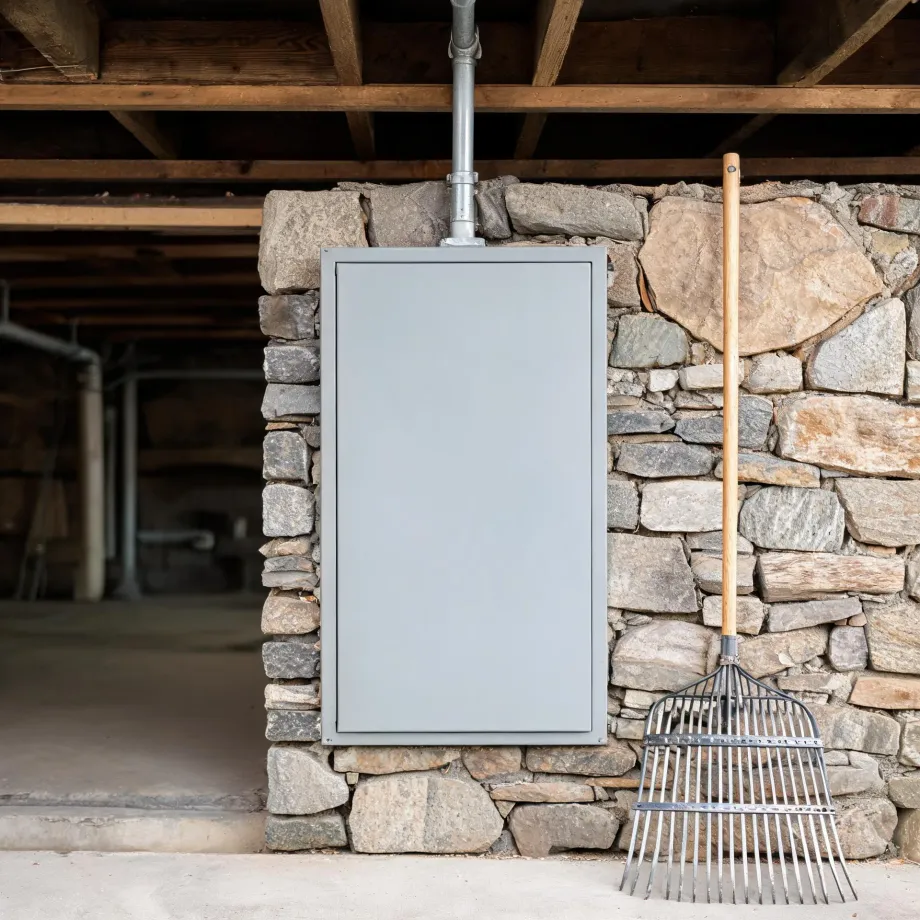
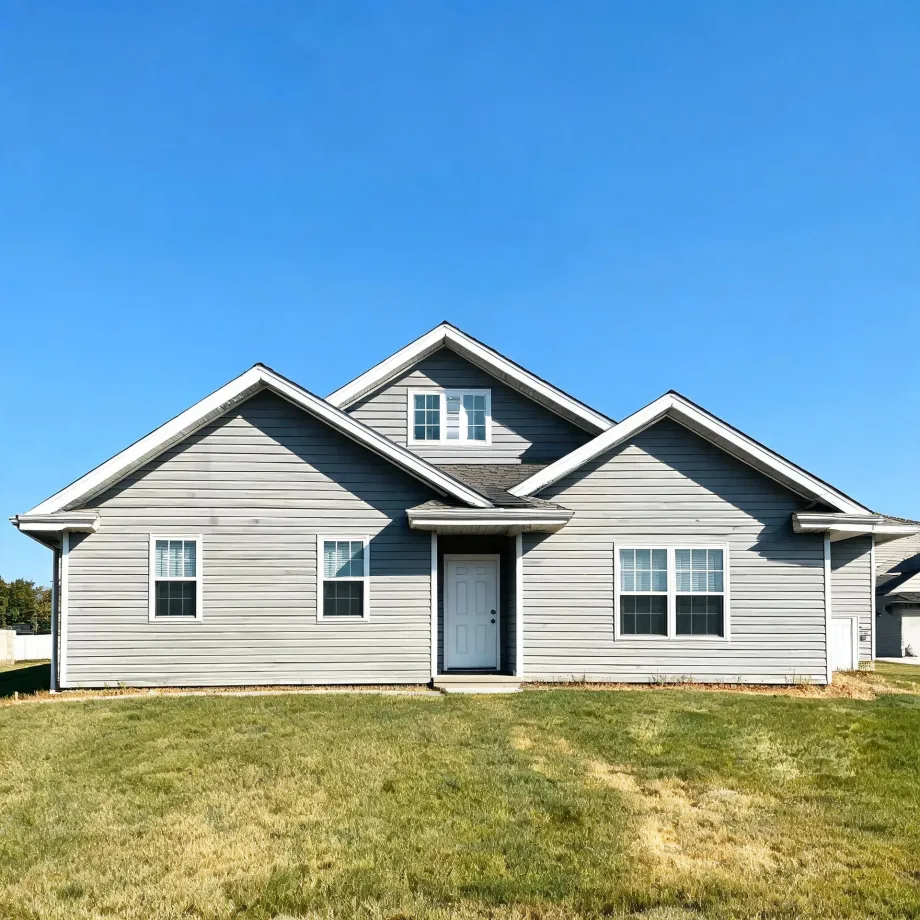
Ductwork laid down for a furnace and left largely untouched since then is what a contractor opens up in a significant share of Kent County homes. Half the homes in Kent County, Rhode Island were built in 1967 or earlier (2020-2024 ACS 5-year). That original ductwork was sized and routed for a different kind of airflow, and whether it can carry a modern central AC system without being rerun or heavily modified is the question that shapes the quote more than the equipment selection does. The electrical panel gets the same scrutiny: a service sized for the loads of that era frequently needs an upgrade before a new condensing unit can be connected.
What Gets Installed With a New Central AC
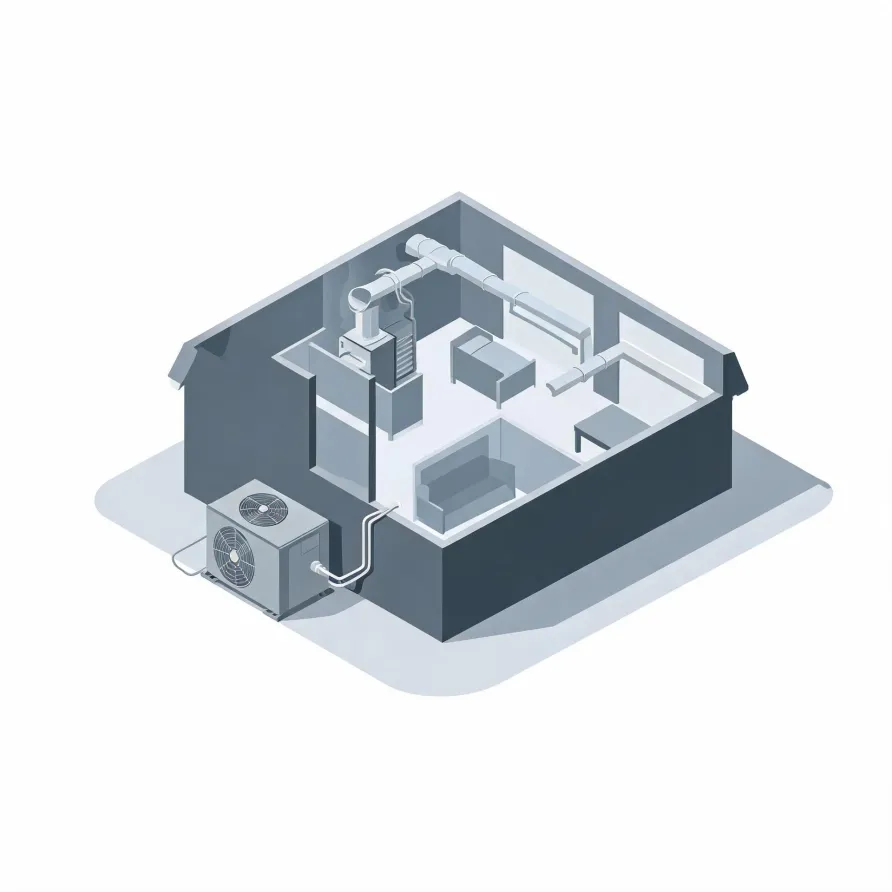
The outdoor condenser unit sits outside the house, usually on a concrete pad at ground level, and holds the compressor and condenser coil. Inside, the air handler or furnace-mounted evaporator coil sits in a utility space, basement, or closet, where it connects to the supply and return air paths already in the home.
The refrigerant line set runs between those two units, typically along an exterior wall or through a small penetration in the building envelope. A thermostat goes on an interior wall where it reads the living space and signals the system to run.
The drawing shows a general layout of these components, and a licensed contractor determines exactly how each one is positioned and connected in your specific home.
Find a contractor in Kent CountyKent County, Rhode Island, by the numbers
146 severe weather events were recorded in Kent County, Rhode Island between 2015 and 2024.
NOAA National Centers for Environmental Information, Storm Events Database, bulk CSV export, events 2015-01-01 through 2024-12-31.Half the homes in Kent County, Rhode Island were built in 1967 or earlier (2020-2024 ACS 5-year).
U.S. Census Bureau, 2020-2024 American Community Survey 5-Year EstimatesKent County, Rhode Island holds 76,529 housing units (2020-2024 ACS 5-year).
U.S. Census Bureau, 2020-2024 American Community Survey 5-Year EstimatesOwners occupy 73.1% of the occupied homes in Kent County, Rhode Island (2020-2024 ACS 5-year).
U.S. Census Bureau, 2020-2024 American Community Survey 5-Year EstimatesRules & Standards Governing Central AC Installation in Kent County, Rhode Island10 sourced rules and standards
What the Installation Actually Looks Like
Split-system central air conditioners rated below 45,000 Btu/h manufactured on or after January 1, 2023 must meet a federal minimum of 13.4 SEER2.
Split-system central air conditioners rated at or above 45,000 Btu/h manufactured on or after January 1, 2023 must meet a federal minimum of 13.4 SEER2.
Split-system central air conditioners manufactured between January 1, 2015 and December 31, 2022 had to meet 13 SEER, the metric that preceded SEER2.
Single-package central air conditioners manufactured on or after January 1, 2023 must meet a federal minimum of 13.4 SEER2.
Space-constrained central air conditioners manufactured on or after January 1, 2023 must meet a federal minimum of 11.7 SEER2.
Federal efficiency standards for split-system central air conditioners and heat pumps are set on each certified combination of outdoor unit and indoor coil rather than on the outdoor unit alone.
Residential and light commercial air conditioning and heat pump systems assembled in the field, including mini-splits and unitary systems, may not be installed on or after January 1, 2025 using a refrigerant with a global warming potential above 700.
A field-assembled system whose specified components were all manufactured or imported before January 1, 2025 carries no installation compliance date under the refrigerant restrictions and may still be installed.
Licensing Rules for Kent County, Rhode Island
A Rhode Island master licensee needs no separate sheet metal licence while the air handling equipment is ten (10) tons or less, or the heating equipment does not exceed 250,000 BTUs; above either figure the sheet metal work must be subcontracted to a licensed sheet metal contractor.
Rhode Island requires a licence from the Department of Labor and Training to work in the mechanical trades: nobody may hold themselves out as a master, or advertise that they will install refrigeration and air conditioning or air distribution systems, without one.
Severe Weather Events in Kent County
Weather puts real load on cooling equipment, and that load is shaped by local conditions. What happens in Kent County over the years drives how hard a central AC system has to work and how well it needs to be sized and installed.
146 severe weather events, 2015–2024. Source: NOAA National Centers for Environmental Information, Storm Events Database.